
Her Power Was Never in the Fruit
For centuries in Thailand, the mangosteen was prized for the part the rest of the world throws away. Not the sweet white flesh everyone remembers. The deep purple rind that guards it, wild-grown, hand-harvested, and richer in xanthones than almost anything else that grows.
Her Power Was Never in the Fruit
For centuries in Thailand, the mangosteen was prized for the part the rest of the world throws away. Not the sweet white flesh everyone remembers. The deep purple rind that guards it, wild-grown, hand-harvested, and richer in xanthones than almost anything else that grows.
You have probably been buying the wrong part of the fruit
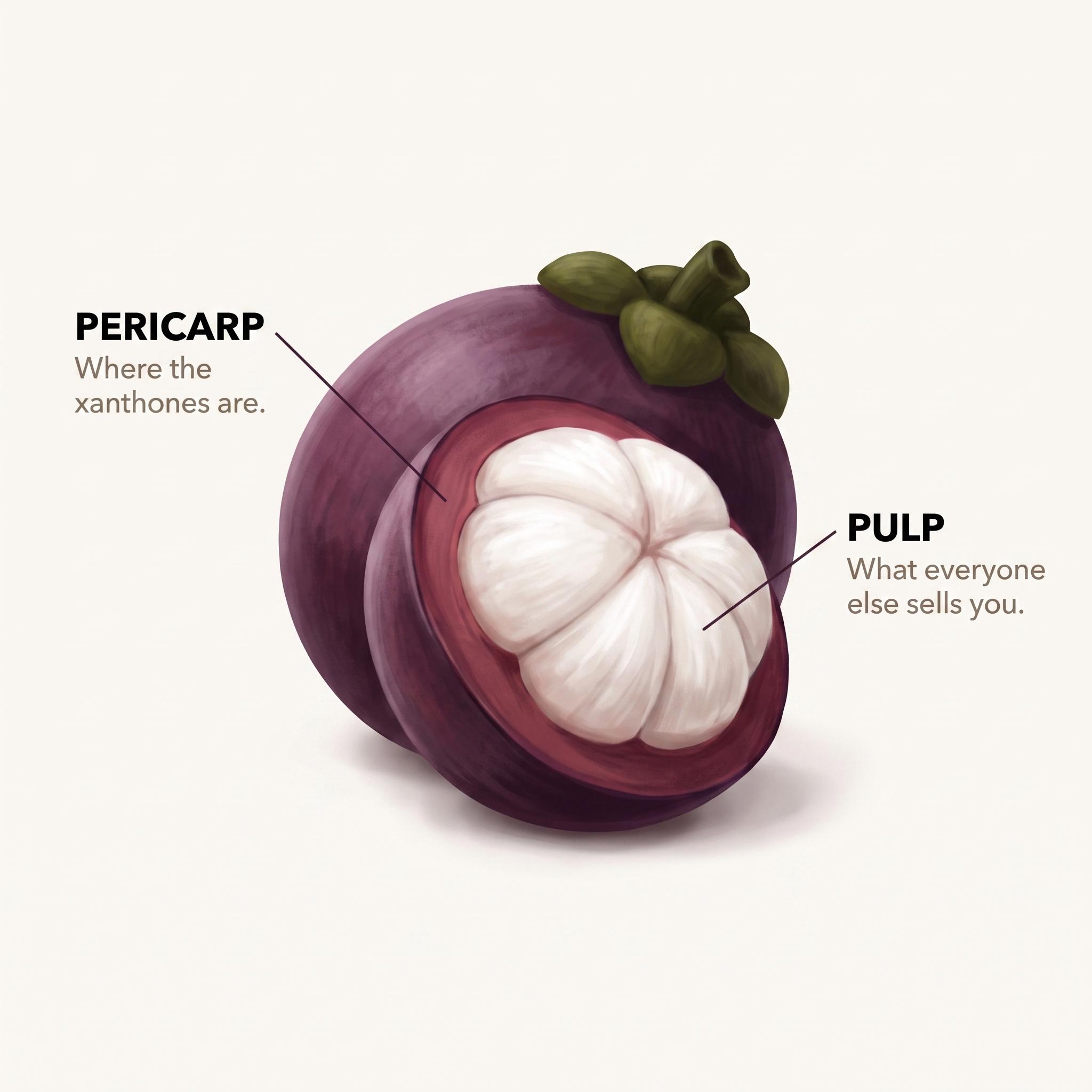
Pick up almost any mangosteen product and read the label. It's juice. Sweet, purple, mostly sugar and water, pressed from the fruit pulp with enough rind blended in to justify the color.
Here's the problem with that. The xanthones are not in the pulp. Alpha-mangostin, gamma-mangostin, the garcinones, the compounds that put mangosteen into two decades of research papers, are concentrated in the rind and essentially absent from the sweet white flesh.
So when the ingredient list says "mangosteen fruit," you are paying for the part with the least going on. The industry built itself on the half of the fruit that tastes better.
We use the pericarp and nothing else. No pulp, no fillers, no bulking agents. It is the harder half to sell, and it is the only half worth selling.
Why the rind is so heavily studied
Xanthones are a class of polyphenol that show up in very few plants. Mangosteen pericarp is one of the richest sources on earth, and alpha-mangostin is the star of the group.
Researchers have spent two decades on these compounds because of how they behave in the lab: antioxidant activity, and an anti-inflammatory effect on the signaling pathways your body runs on (NF-kB and COX-2, if you like the technical version).
The pericarp is where the compounds are, the traditional use in Southeast Asia goes back centuries, and this is the most concentrated whole-food form of it you can get without a solvent extraction.
Addictive Wellness
Typical Mangosteen Supplement
Plant Part
Pericarp only
Whole fruit, mostly pulp
Growing
Wildcrafted in Thailand
Plantation-farmed
Processing
Freeze-dried, no heat, no mechanical grinding
Heat-dried,
hammer milled
Form
Pure mangosteen pericarp, nothing added
A juice diluted with cheap sugary fruit juice, apple, grape, and pear, mangosteen is rarely more than a splash.
Read the ingredient panel on most mangosteen products and mangosteen usually isn't even first. It's a juice blend built on cheap, sweet filler, apple, grape, pear, sometimes just "fruit juice concentrate," with a small amount of mangosteen added mainly for the color and the name on the label. You are paying mangosteen prices for what is functionally a fruit punch.
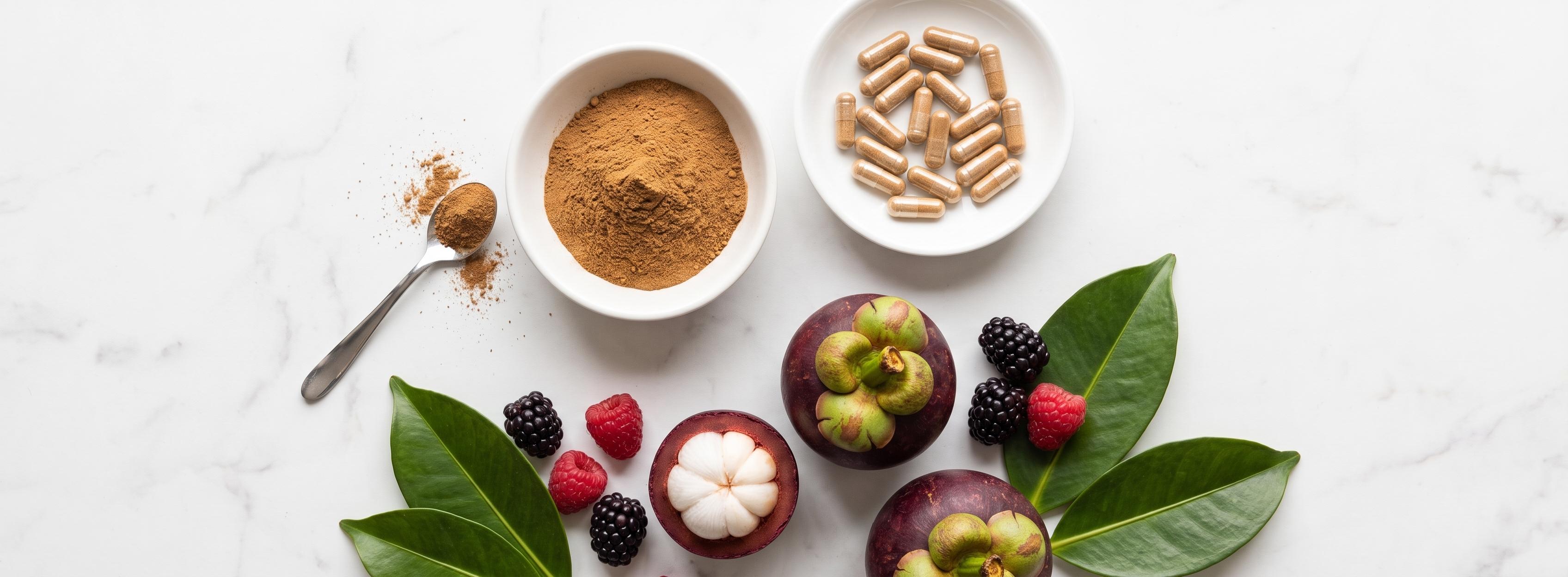
Freeze-drying matters more here than almost anywhere else in our catalog. Heat degrades xanthones. Mechanical grinding generates heat through friction, which is why "no heat" claims usually fall apart at the grinding stage. Our supplier's process skips both, so what's in the packet is as close to the living rind as this plant gets once it leaves Thailand. Nothing diluting it, nothing added to make it more drinkable.
What people take it for:
Antioxidant Support
Xanthones are potent free-radical scavengers. This is the most consistent finding across the entire body of mangosteen research.
A Calm Inflammatory Response
The pericarp's compounds interact with the same signaling pathways your body uses to regulate inflammation. Supports a healthy inflammatory response.
Skin
Traditional Thai use centers on the skin, and the modern research on xanthones and skin health follows the same thread. Beauty from the inside isn't a new idea here, it's the original one.
Immune and Gut
Xanthones support gut barrier integrity and healthy immune function, which is where a lot of the traditional digestive use comes from.
What people take it for
Antioxidant Support
Xanthones are potent free-radical scavengers. This is the most consistent finding across the entire body of mangosteen research.
A Calm Inflammatory Response
The pericarp's compounds interact with the same signaling pathways your body uses to regulate inflammation. Supports a healthy inflammatory response.
Skin
Traditional Thai use centers on the skin, and the modern research on xanthones and skin health follows the same thread. Beauty from the inside is not a new idea here, it's the original one.
Immune and Gut
Xanthones support gut barrier integrity and healthy immune function, which is where a lot of the traditional digestive use comes from.
These statements have not been evaluated by the Food and Drug Administration. This product is not intended to diagnose, treat, cure, or prevent any disease.
Wildcrafted in Thailand
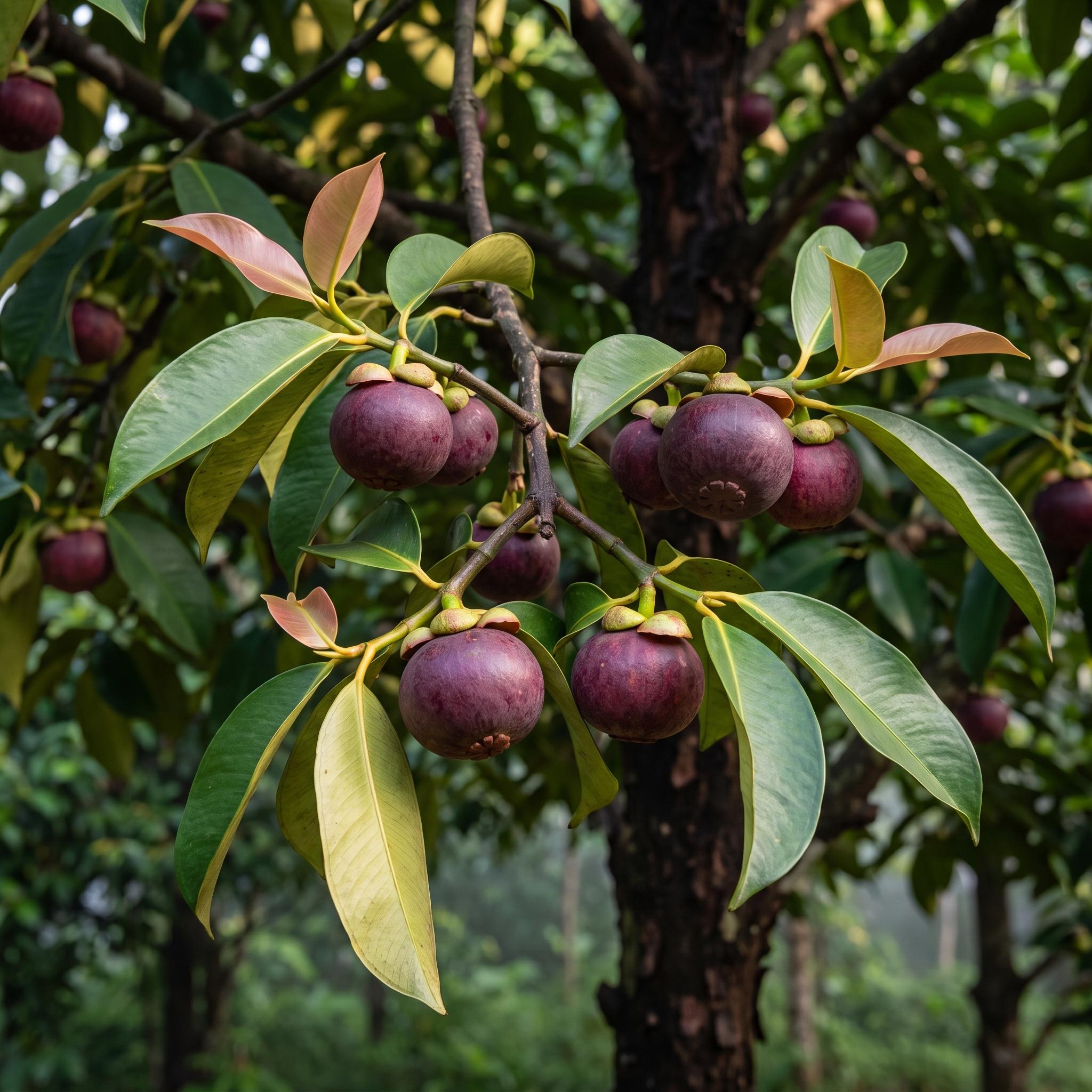
Mangosteen grows across Southeast Asia, but Thailand is where it's been used medicinally the longest and where the trees produce the most potent rind. That's the same rule we apply to every ingredient we carry: go to the place with the deepest tradition and the strongest plant, then don't compromise on the rest.
Ours is wildcrafted, not plantation-grown. A plantation optimizes a mangosteen tree for the sweet pulp: irrigated, fertilized, bred and pruned to produce as much juicy fruit as possible, as fast as possible. That's the opposite of what we're after. Our trees grow in standing forest, on their own root systems, at their own pace, with no fertilizer forcing the fruit and nothing controlling what stresses the tree faces along the way. That unforced growth is part of why the rind carries what it carries. A tree grown for yield and a tree grown for potency are not the same tree, even when they're the same species.
The fruit is hand-harvested, tree by tree, by people who know these specific trees and pick at the point the rind is ready, not on a plantation's harvest schedule. There's no mechanized picking here and no grading line sorting for size and color the way a fruit-juice operation would. What comes off the tree is what goes into processing.
Which one is right for you?
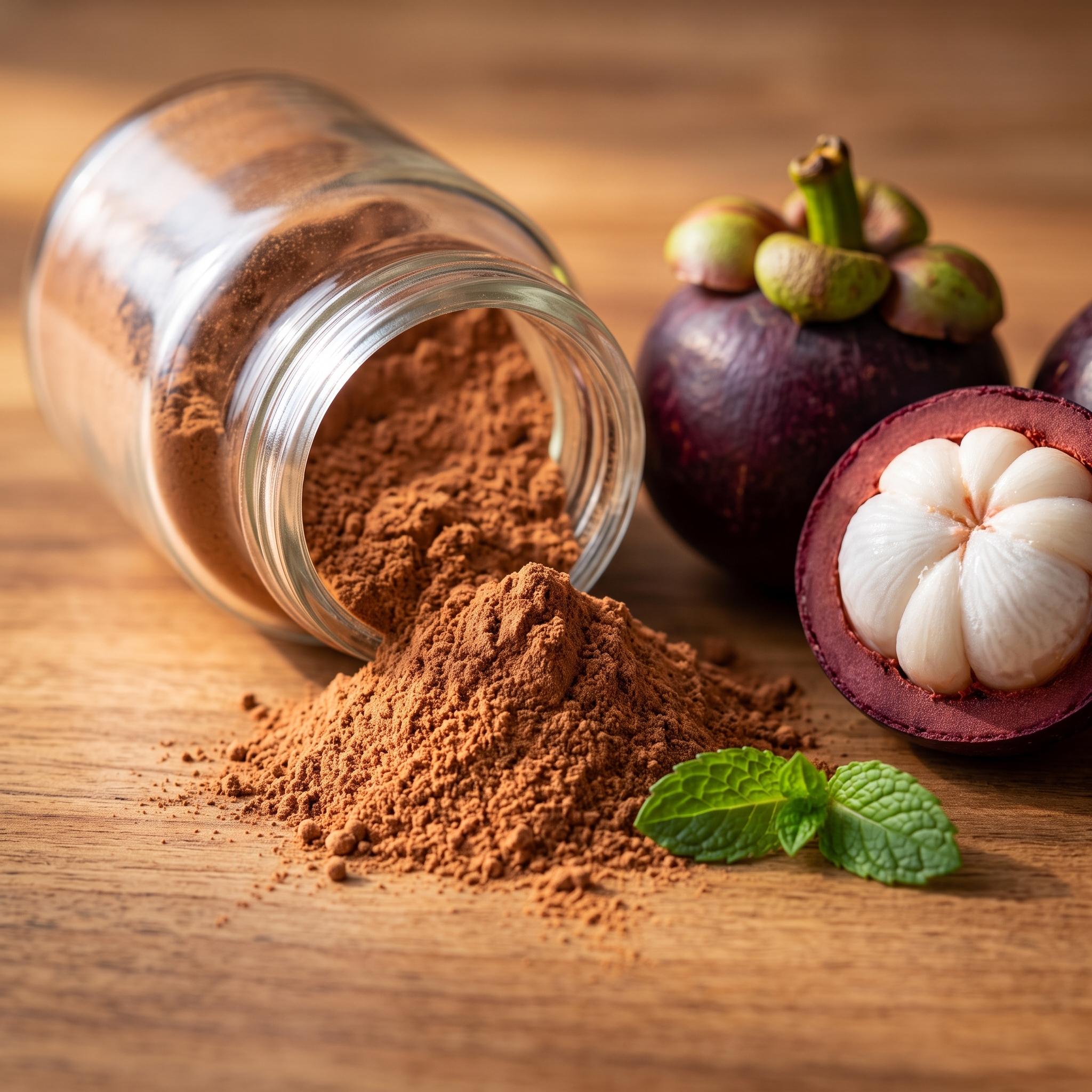
Powder
-
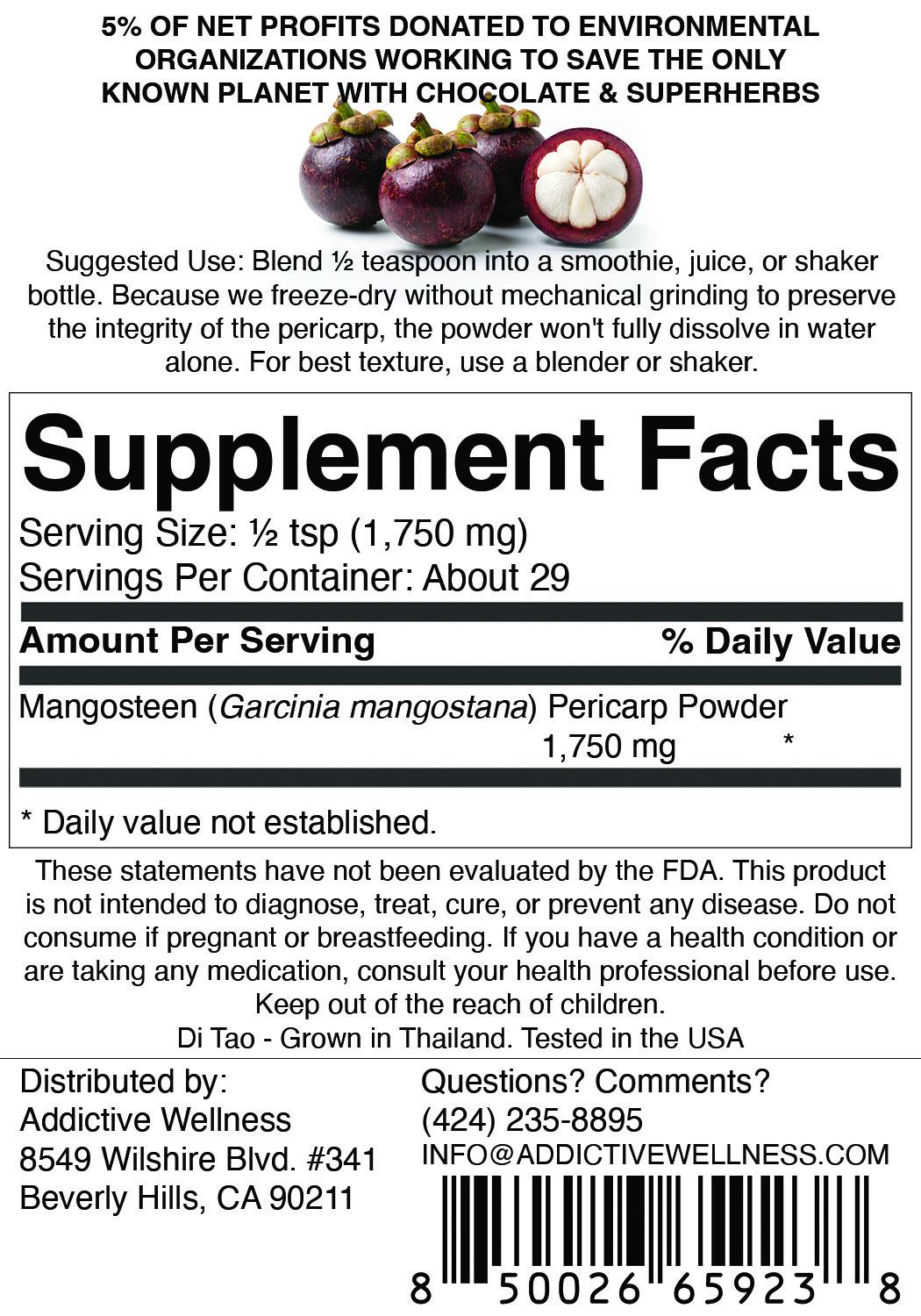
Half a teaspoon per serving, 1,750 mg
-
Blends into a berry smoothie without a fight
-
Tart, astringent, and a little bitter, so it wants fruit alongside it. Dark berries are the natural partner.
-
Also works in a tart juice like pomegranate or cranberry, or warm water with honey, the traditional way it's taken in Thailand
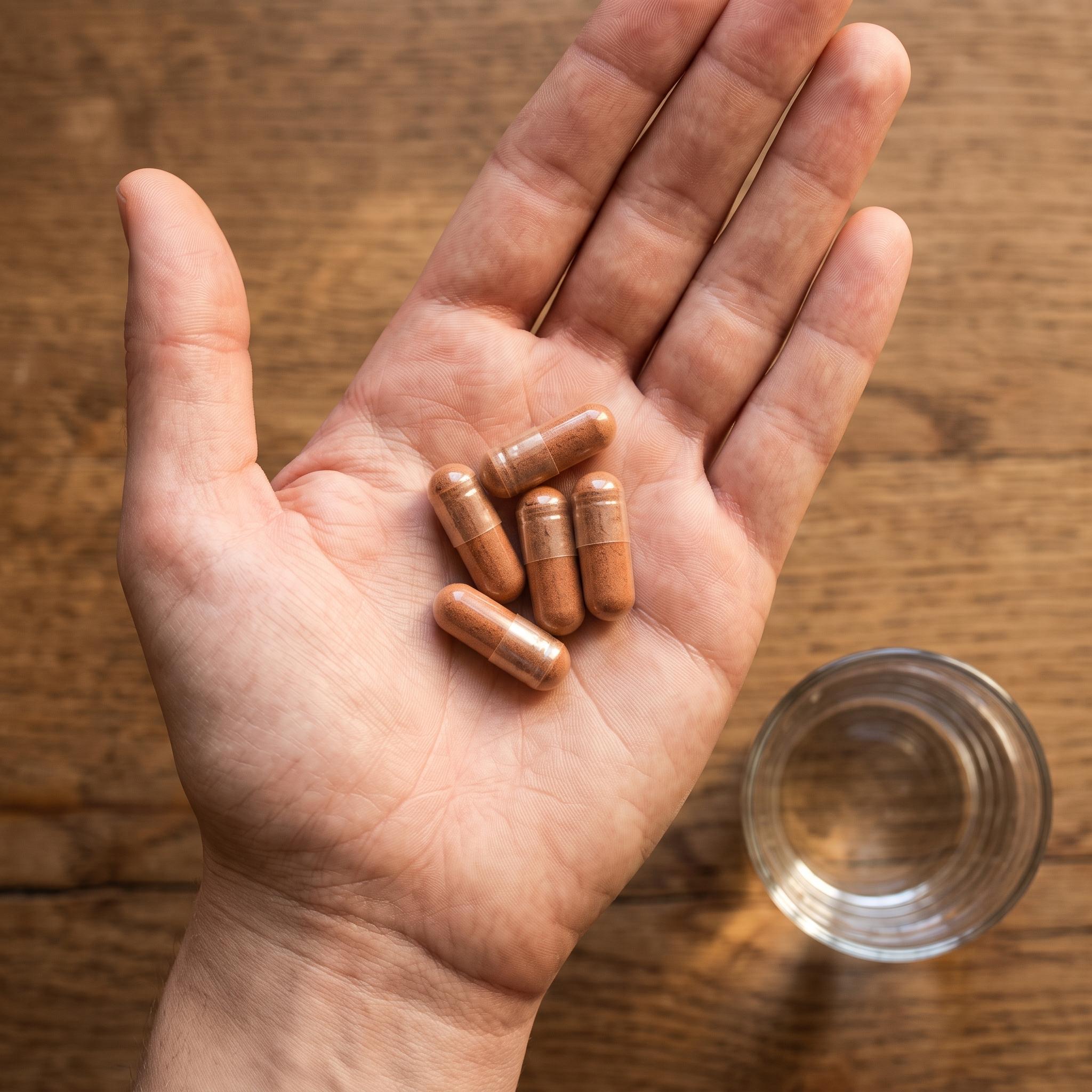
Capsules
-
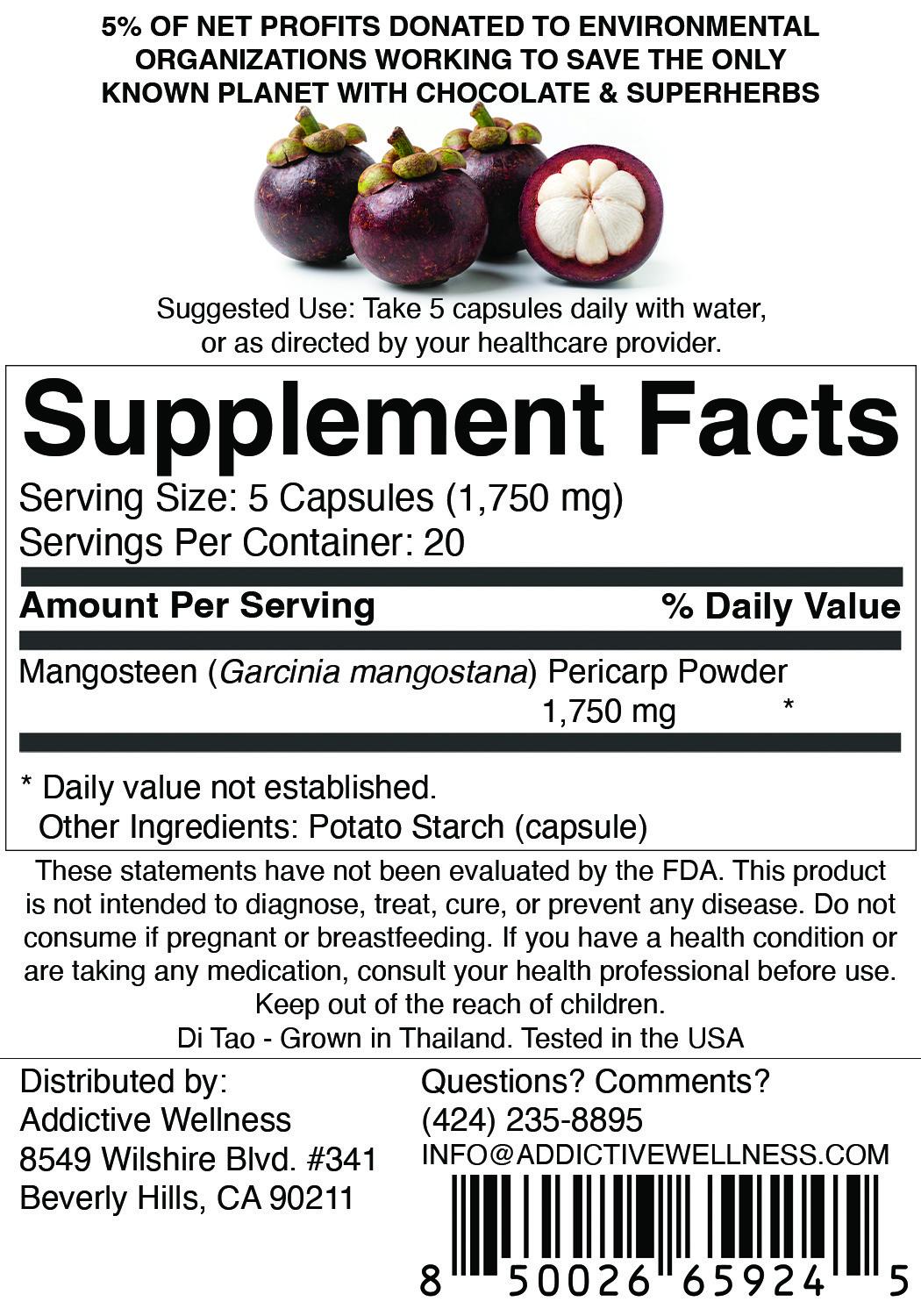
5 capsules per serving, 350 mg each, 1,750 mg total
-
The exact same dose as half a teaspoon of powder, no math required
-
Zero flavor, zero prep, travels anywhere
-
A clear potato starch shell, so you can see the powder through it. No gelatin, no synthetic cellulose, nothing to hide behind
Same rind, same processing, same dose. The only question is whether you want to taste it.
Getting it into your day
Powder: Half a teaspoon, once a day.
Capsules: Five capsules with a meal, once a day. Food helps with absorption of the fat-soluble xanthones, so take it with something that has a little fat in it.
Consistency beats intensity. These are compounds that accumulate. Daily for a month beats a big dose once a week.
Powder
Capsules
Third-Party Tested
We test this mangosteen pericarp for heavy metals with reputable third-party labs. Mangosteen is a tree fruit, which puts it at low risk to begin with, and we test anyway because "low risk" is not a test result.
-
Three things at once: tart, astringent, and a little bitter. None of them is overwhelming, and none of them is hiding either. If you're expecting the sweet white fruit that mangosteen is famous for, this is not that. This is the rind, and the rind tastes like a medicinal plant, because it is one.